This guide includes ordinary, untracked retailer search links. We do not earn a commission from these links at present. Read our disclosure.
Map the crowded after-dinner moment
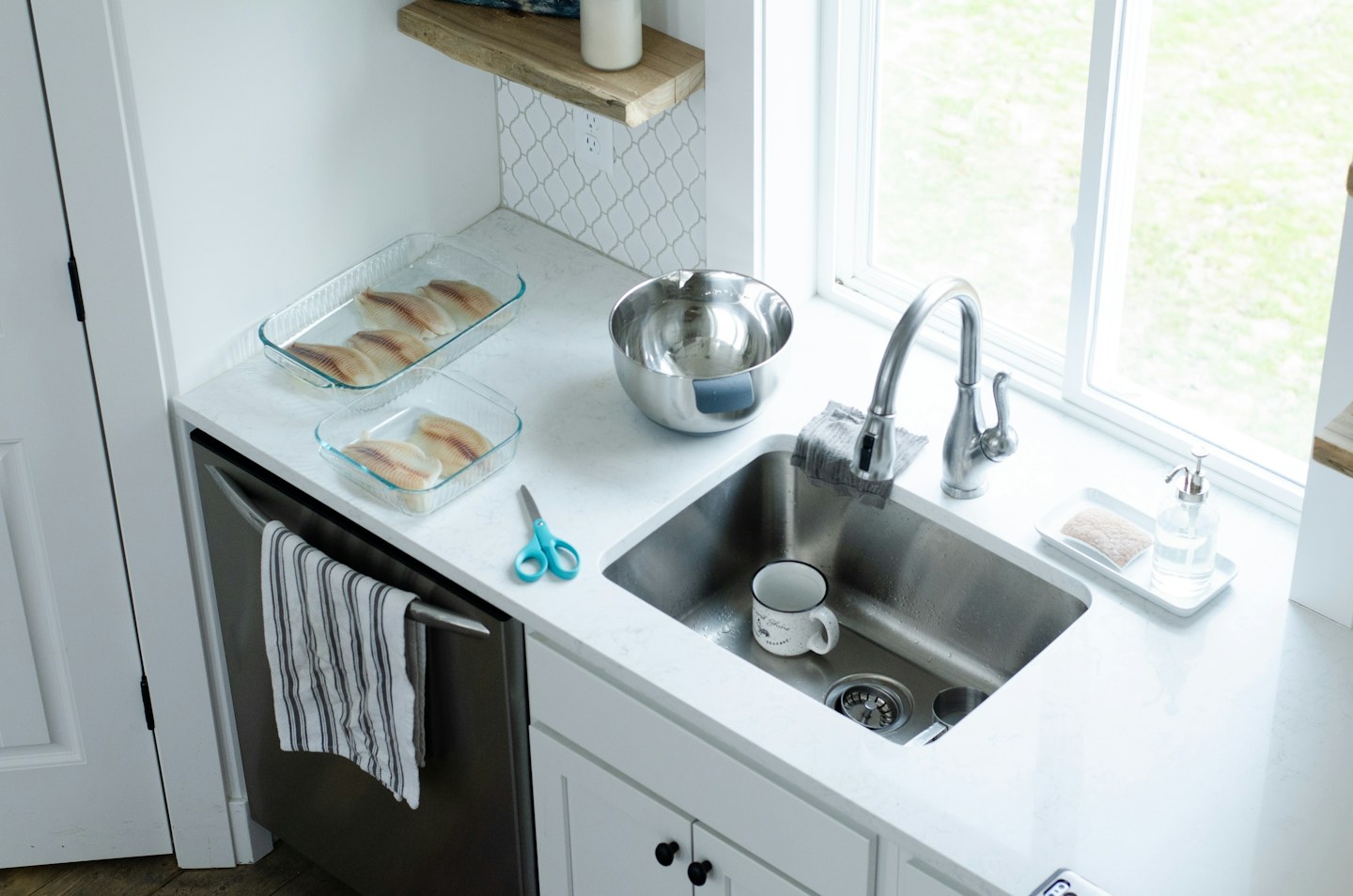
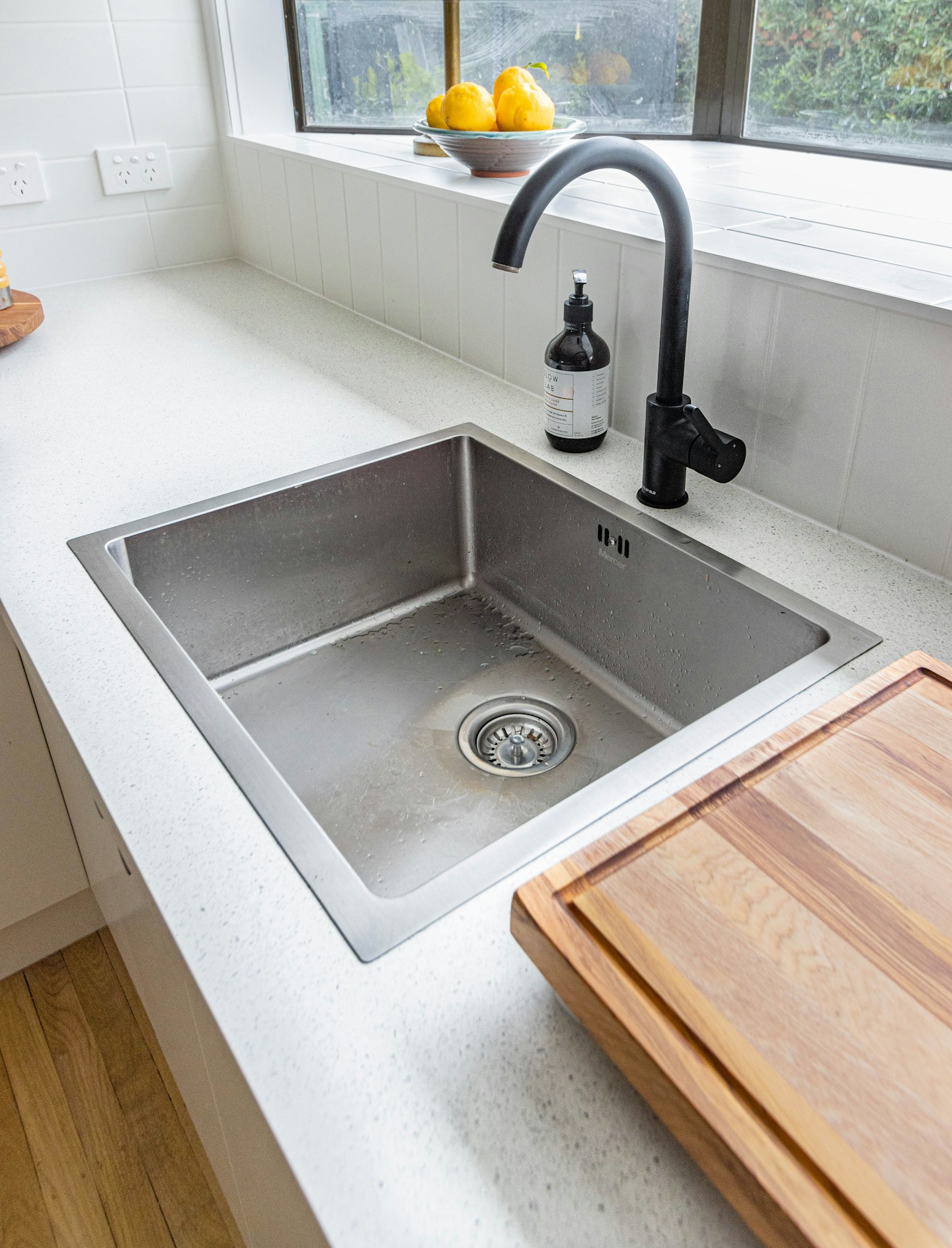
Two people are clearing dinner in a narrow kitchen. One needs the tap while the other reaches past a soap bottle, and the brush has landed in a puddle beside a pan. The problem is not necessarily too few organizers. It may be that the accessories occupy the space where wet dishes need to land.
Observe the route from dirty dishes to washing, rinsing, and drying. Put soap within comfortable reach without blocking the tap controls. Give the brush a home that does not interfere with placing a large pan in the sink. Keep the edge used for setting down dishes as clear as possible.
Decide whether a dispenser earns its place
An original soap bottle can be a practical option if it stands securely and is easy to operate. A refillable dispenser may make a frequently used bottle easier to handle, but it also adds a vessel to refill and clean. A coordinated appearance alone does not solve a difficult washing routine.
Check pump access with wet hands, base stability, and the amount of clearance needed to refill it. Follow the soap and dispenser guidance when transferring contents; do not combine leftover products casually. Keep the product identity and instructions available rather than losing them when the original packaging is discarded.
Match the brush to the dishes
Choose the brush around the work it will do most often. A long handle can help reach a tall vessel, while a broad head may suit open pans but struggle inside a narrow bottle. Consider grip, head size, and access under rims before choosing an appealing matching tool.
A cleaning tool must also suit the surface being cleaned. Consult cookware and tool guidance instead of assuming one brush or scrubber works everywhere. If different items require different treatment, store the necessary tools distinctly. Avoid buying several overlapping brush shapes when one appropriate everyday brush already covers the regular work.
Make drainage visible and serviceable
A holder with openings needs a real route for water to leave. If it drains onto a counter that remains wet, the openings have simply moved the puddle. A removable collection tray is another approach, but it must be emptied and cleaned. Decide which maintenance routine your sink arrangement can support.
Look for access to the bottom, corners, and underside of the holder. A compact shape is less useful if accumulated water is hidden behind fixed partitions. After washing, position tools as directed so they can drain and dry, and leave enough space that the brush is not pressed against a damp cloth.
Compare freestanding and mounted storage
A freestanding caddy is easy to move for counter cleaning and does not depend on a wall attachment. It occupies valuable landing space, however, and a tall load may affect stability. Measure the base footprint with your usual tools inside rather than judging an empty organizer from its outline.
Mounted storage can release counter space but adds attachment requirements and a fixed location. Check the manufacturer’s surface compatibility and load instructions, plus permission to make changes if you rent. Consider whether the holder can be removed for cleaning and whether its position interferes with the tap or larger cookware.
Who should skip the complete matching setup
Skip a full accessory set if the present soap bottle and brush work well and only their positions are inconvenient. Rearranging them may solve the problem without adding another container. Extra compartments often invite extra tools, which can turn a narrow sink edge into a crowded storage shelf.
Buy one component only after identifying its job. A holder may be justified when tools repeatedly fall into the sink; a dispenser may help when the existing bottle is awkward to use. Keep the setup small enough to lift or clean around during ordinary kitchen cleanup, not just an occasional deep clean.
Before you buy
- Keep tap controls and pan placement space clear.
- Check wet-hand pump operation and base stability.
- Choose brushes compatible with the surfaces you clean.
- Verify where drained water will actually collect.
- Ensure the holder can be inspected and cleaned underneath.
Ready to compare options?
Use the criteria above to check dimensions, materials, care instructions, and the seller’s current terms. Retailer search results may include sponsored listings; they are not our ranked picks.
Browse Amazon options ↗Untracked retailer search · Opens a new tabCommon questions
Is a draining caddy automatically the best choice?
No. Its usefulness depends on where the water goes and whether the surrounding area can dry. A removable tray can work if you maintain it.
Should every cleaning tool stay beside the sink?
Keep frequently used, appropriate tools within reach. Store occasional tools elsewhere once clean and dry instead of crowding the daily washing area.
Can I mount a holder on any backsplash?
Do not assume so. Match the attachment to the manufacturer’s approved surfaces and loading instructions, and check any restrictions on altering a rented kitchen.
How this guide was prepared
This is general buying and organization guidance, not a hands-on product review. Match the advice to your household and check the manufacturer’s care and safety instructions before purchasing or use.
Our editorial standards →