This guide includes ordinary, untracked retailer search links. We do not earn a commission from these links at present. Read our disclosure.
Count the dishes from one normal dinner
In a kitchen without a dishwasher, dinner for two might leave plates, bowls, glasses, cutlery, and a saucepan waiting to dry. The smallest rack in the shop may hold the plates but force everything else onto a towel. Count the items from a typical washing session before judging how compact a rack should be.
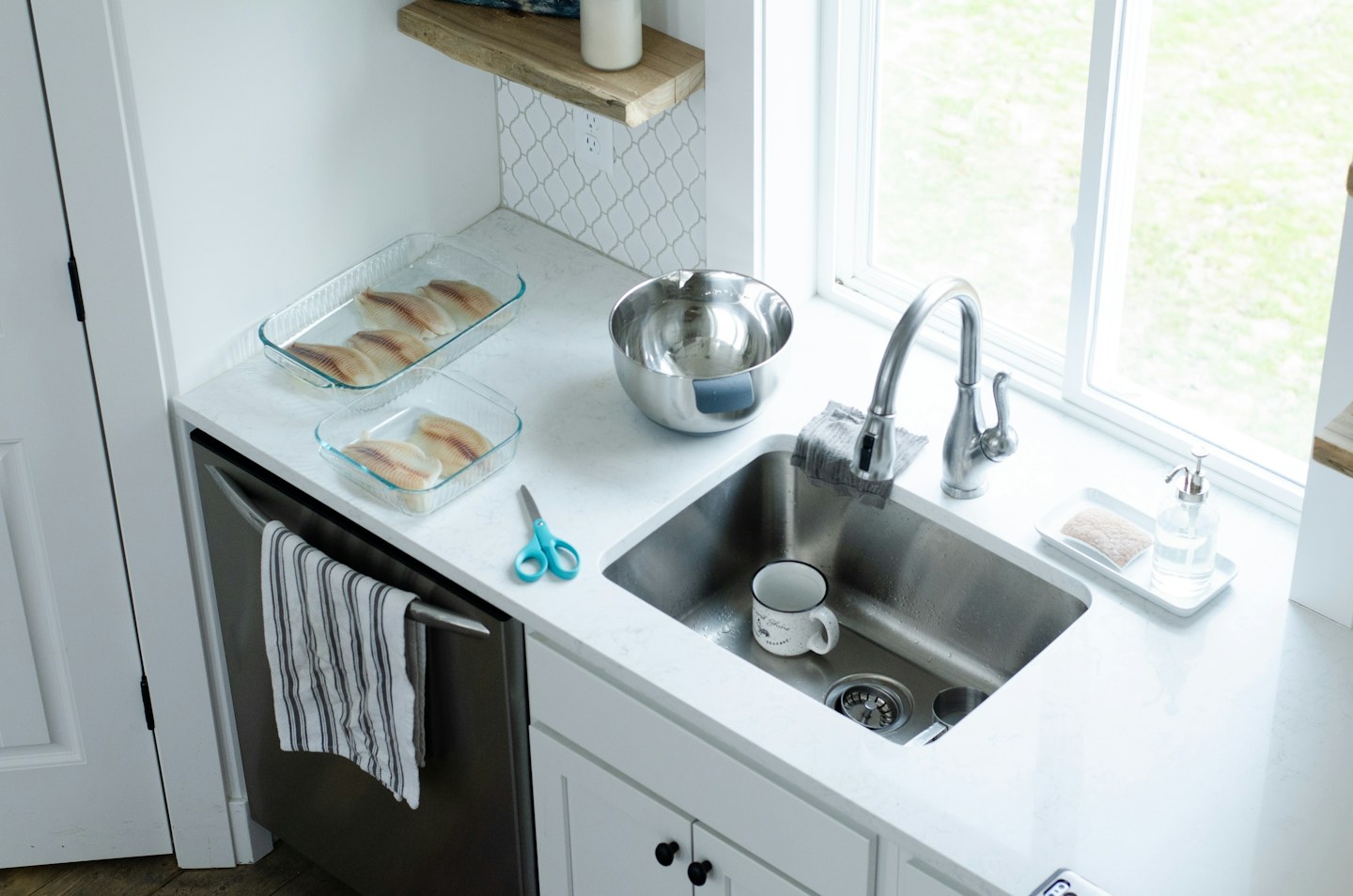
Measure the counter beside the sink and note where you still need space to chop ingredients or set down groceries. Check faucet movement and cabinet doors as well. A rack that technically fits can still interrupt the kitchen if its loaded dishes extend into the faucet area or block a frequently used cupboard.
Match the layout to your sink arrangement
A countertop rack offers a predictable landing area, especially when it has a tray that suits the direction of drainage. An over sink option can release counter space, but its dimensions need to match the sink and its supports must remain settled. It may also obstruct washing while dishes are drying.
A folding rack works well when you want the counter clear between meals, provided you have somewhere to store it after drying. A tiered design adds capacity vertically but can be awkward beneath a low cabinet. Skip tall racks if you regularly dry fragile glasses or heavy cookware that needs a straightforward loading arrangement.
Look beyond the number of plate slots
Plate spacing should accommodate the thickness of your actual dishes, including deeper dinner plates. Check whether bowls can sit securely and whether mug handles have enough room. A separate utensil holder is useful if it drains freely and can be removed for cleaning. Tall utensils should not make the loaded rack feel unbalanced.
If one pan dominates the rack every evening, consider drying it separately rather than buying a much larger organizer. People who wash only a mug and a lunch container may prefer a simple folding stand to a fully equipped rack.
Make drainage and cleaning easy to inspect
Inspect how water reaches the sink or collects in the tray. A spout only helps if it points where you need it and sits at a workable height beside your sink edge. If water collects, choose a tray you can remove and empty easily instead of assuming the rack will manage drainage automatically.
Material descriptions are less helpful than accessible joints and removable components. Even finishes promoted for durability require cleaning and suitable care. Look for corners you can reach, feet you can wipe around, and a utensil cup that separates without a struggle.
Choose the arrangement you can reset daily
Leave a practical loading order: larger dishes first, small items where they can drain, and a separate place for cookware if needed. Put dry dishes away before starting the next session. This keeps capacity available and makes it easier to notice pooled water or residue underneath the rack.
Skip a permanent rack if a dishwasher handles nearly everything and your remaining items fit a small occasional drying setup. Conversely, do not choose a tiny model solely to preserve a minimalist look when it creates daily overflow. The best compact option balances a clear counter with the dishes your household actually uses.
Compare the practical tradeoffs
| Rack layout | Useful situation | Main limitation |
|---|---|---|
| Countertop with tray | A dedicated drying corner | Occupies preparation space |
| Over sink | Very limited counter room | Can interrupt sink access |
| Folding | Occasional hand washing | Needs dry storage afterward |
| Tiered | More dishes in a narrow footprint | Needs height and careful loading |
Before you buy
- Count dishes from a typical washing session.
- Measure counter, sink, faucet, and cabinet clearance.
- Check spacing with your plate and bowl shapes.
- Confirm drainage direction and removable tray access.
- Plan a separate spot for awkward large cookware.
Ready to compare options?
Use the criteria above to check dimensions, materials, care instructions, and the seller’s current terms. Retailer search results may include sponsored listings; they are not our ranked picks.
Browse Amazon options ↗Untracked retailer search · Opens a new tabCommon questions
Will an over sink rack fit any sink?
No. Compare the stated support range with your sink dimensions and edge shape. Check faucet access and how the rack rests when loaded. A visually similar sink does not establish that the fit will be reliable.
Is a drying mat enough instead of a rack?
It may work for occasional dishes, particularly when you can spread items out and follow the mat’s care instructions. A rack is often more convenient for upright plates and organized drying when you wash a full dinner load.
How do I avoid water collecting under the rack?
Choose a drainage arrangement that fits the sink edge, keep its route clear, and empty collected water as needed. Remove and clean the tray regularly according to its instructions. A drainage spout does not eliminate maintenance.
How this guide was prepared
This is general buying and organization guidance, not a hands-on product review. Match the advice to your household and check the manufacturer’s care and safety instructions before purchasing or use.
Our editorial standards →