This guide includes ordinary, untracked retailer search links. We do not earn a commission from these links at present. Read our disclosure.
Start with a tired Tuesday, not a display shelf
Imagine arriving home with twenty minutes to assemble pasta, a quick curry, or beans on toast. The pantry should help you find the building blocks without moving several unrelated jars. List five dinners you cook repeatedly, then identify the ingredients they share. Those ingredients deserve the easiest positions to reach.
Empty one shelf at a time rather than dismantling the whole pantry during a busy evening. Group what remains by actual use, noting duplicates and packages you repeatedly forget. A beautiful arrangement that separates ingredients you always cook together creates extra work. Let the dinner routine lead, with appearance a secondary consideration.
Create meal zones without trapping ingredients
Set up broad zones such as quick dinners, breakfast, baking, and snacks. Keep flexible ingredients, including rice and canned tomatoes, near the boundary between relevant zones. Narrow baskets can gather a few small packets, but a deep container filled with unrelated food becomes another cupboard you must search through.
For a household with different schedules, reserve one visible zone for straightforward meals anyone can assemble. Keep frequently used seasonings nearby rather than distributing them across decorative shelves. Avoid assigning every possible dish its own basket. Shared ingredients and changing preferences make a small number of adaptable zones easier to maintain.
Choose organizers for the shelf you have
Measure usable shelf width, depth, and height, including the space lost to hinges or door frames. A riser helps reveal cans on a tall shelf, while a shallow bin lets you pull packets forward. Neither solves an overcrowded pantry. Reduce excess stock before buying organizers intended to hold more of it.
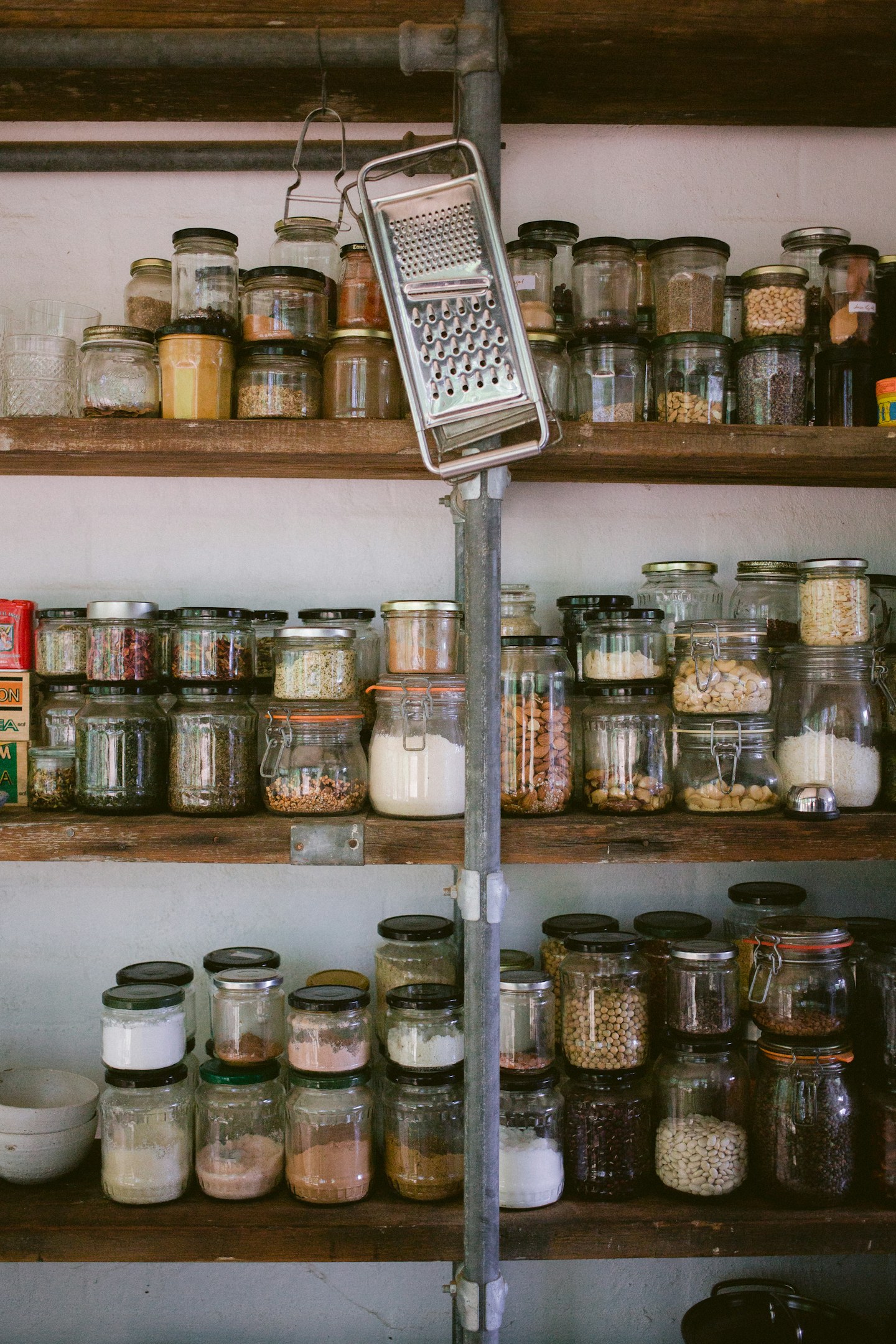
Use clear containers selectively for ingredients that scatter, arrive in awkward bags, or are difficult to pour. Keep necessary package information accessible and transfer any relevant instructions or dates. People who buy many changing ingredients should skip an elaborate matching container system; repeated refilling and relabeling can outweigh the tidier appearance.
Make replenishment visible
Place newer purchases behind older stock where practical, and keep a small shopping list beside the pantry or in a shared household note. Choose a refill trigger you can recognize, such as opening the final packet. Do not rely on perfectly aligned containers to tell you whether enough food remains for dinner.
Give reserve stock one defined area rather than hiding duplicates throughout the kitchen. If a bulk bag cannot fit there comfortably, consider a smaller purchase next time. Before shopping, check the quick dinner zone and plan around ingredients already open. Organization works best when it changes what enters the pantry, not just where it sits.
Keep the reset short enough to repeat
After putting groceries away, spend a few minutes returning displaced items and removing empty packaging. Review one neglected shelf periodically rather than committing to a lengthy weekly overhaul. Leave some unused space so a new sauce or an unexpected grocery delivery does not immediately break the arrangement.
Skip extensive pantry hardware if you mainly buy fresh ingredients or use one small cupboard. A few labels and a shallow basket may be enough. In a shared kitchen, agree on the broad zones before reorganizing someone else’s staples. The best system is one everyone can follow without a diagram or a lecture.
Compare the practical tradeoffs
| Organizer | Useful situation | Main tradeoff |
|---|---|---|
| Shallow bin | Small dinner packets | Uses some shelf width |
| Shelf riser | Rows of cans | Needs vertical clearance |
| Refillable container | Frequently poured dry ingredients | Adds transfer and labeling work |
Before you buy
- List five regular dinners before rearranging shelves.
- Measure shelves and door clearance before buying organizers.
- Keep shared dinner ingredients within easy reach.
- Reserve one visible area for unopened backup stock.
- Use a refill trigger and a shared shopping list.
Ready to compare options?
Use the criteria above to check dimensions, materials, care instructions, and the seller’s current terms. Retailer search results may include sponsored listings; they are not our ranked picks.
Browse Amazon options ↗Untracked retailer search · Opens a new tabCommon questions
Should every dry ingredient go into a matching container?
No. Start with ingredients that are awkward to store or pour from their original bags. If a package already stacks neatly and changes often, keeping it intact can reduce work and preserve useful information.
What if my pantry is only one kitchen cupboard?
Use the front for frequent dinner staples and the back for reserves. A single shallow bin can gather small packets. Avoid adding so many organizers that their walls consume the limited space you need for food.
How can I stop a neat pantry becoming cluttered again?
Make returning groceries part of the routine, and check reserves before shopping. If one zone constantly overflows, reduce its stock or expand its space. Do not blame yourself for a layout that no longer matches your meals.
How this guide was prepared
This is general buying and organization guidance, not a hands-on product review. Match the advice to your household and check the manufacturer’s care and safety instructions before purchasing or use.
Our editorial standards →