This guide includes ordinary, untracked retailer search links. We do not earn a commission from these links at present. Read our disclosure.
Follow the route of your first morning cup
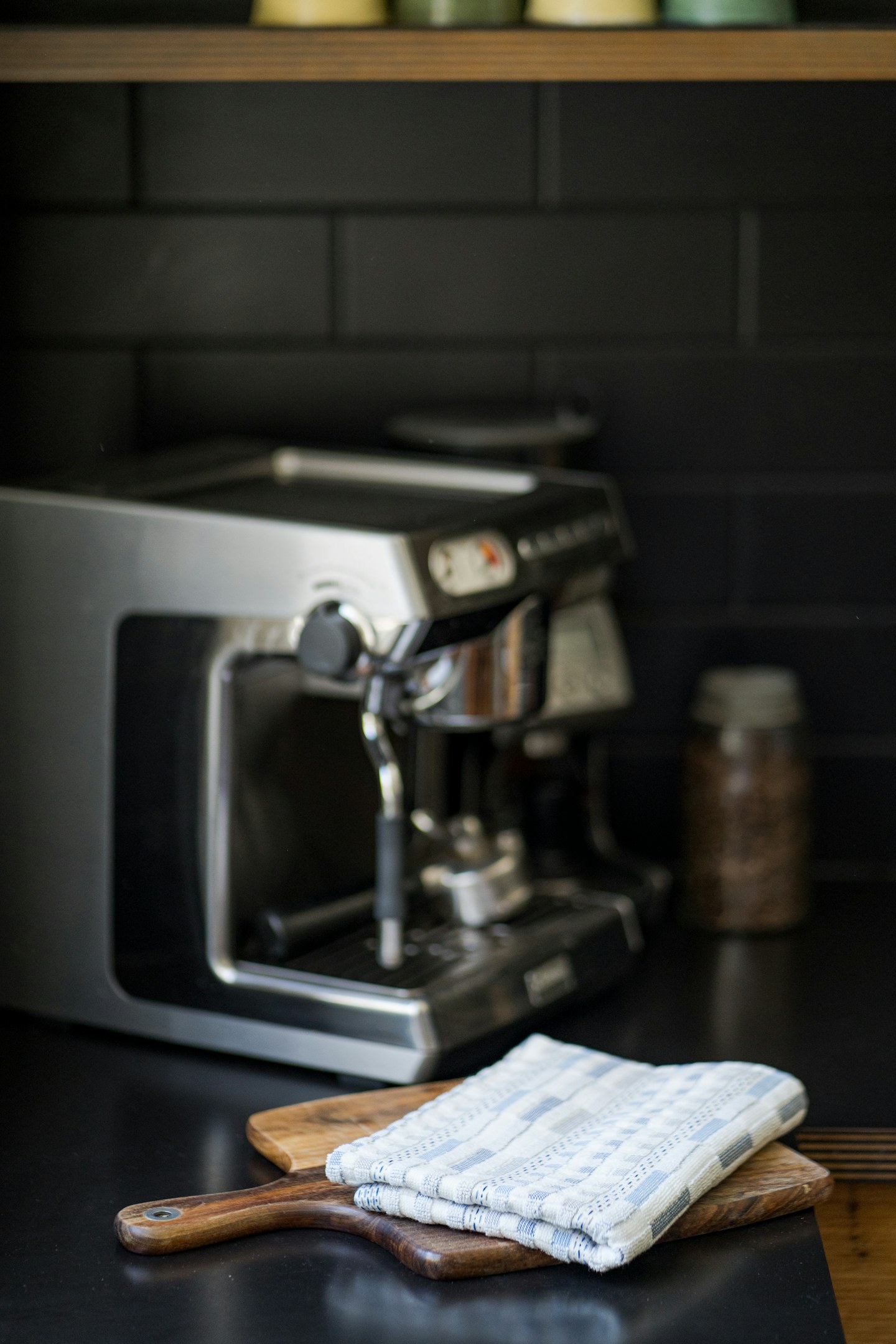
Picture making coffee before work while another person prepares breakfast. You need water, your brewing equipment, coffee, a mug, and somewhere to set used items. Locate the station around that sequence rather than starting with a decorative tray. A beautiful corner across the room from everything else may add unnecessary trips.
Identify which part of the counter can remain occupied without interfering with chopping or washing dishes later. In a narrow kitchen, a morning station may need to be temporary. Keep supplies together on a manageable tray or shelf, but leave enough clear space for handling hot drinks according to the equipment instructions.
Keep one everyday method within easy reach
If you usually make pour over coffee, prioritize the brewer, suitable filters, and a simple place for measuring coffee. If your routine centers on another method, arrange around its actual steps. Avoid building the station around several brewing systems when only one gets regular use. Occasional equipment can live in a nearby cupboard.
Include a grinder only if grinding is part of your established routine and the equipment fits comfortably. A station does not need every accessory to feel complete. People who buy most coffee outside the home should skip a permanent counter installation; a small cupboard group may meet their occasional brewing needs better.
Use vertical space without complicating access
A modest shelf can move mugs or dry supplies off the counter, provided the location and installation suit the kitchen. Keep daily items at a comfortable height.
For appliances, follow placement guidance and account for ventilation, steam, lids, and access to controls. Do not assume that a low shelf above a kettle is a practical arrangement. A cart can help when fixed counters are crowded, but only if it fits the route through the kitchen and its use suits the equipment.
Keep supplies simple and information available
Store the coffee you use most in a suitable container according to its storage guidance, retaining useful package information when you transfer it. Keep reserve supplies elsewhere so the station does not become a display of every bag you own. A small filter holder can prevent scattered papers without demanding much counter space.
Choose the number of mugs around the people who brew coffee regularly, not the full household collection. Put occasional serving pieces with other dishes. A tray can group loose items, but a large one may consume more space than the equipment itself. Measure the assembled arrangement before buying accessories intended to make it compact.
Design the cleanup as carefully as the brewing
Leave a clear route to dispose of used grounds and rinse removable parts. Store cleaning tools where you can reach them, following the equipment’s maintenance instructions. Wipe the station during the daily kitchen reset rather than waiting for it to become cluttered. Supplies should lift out easily so you can clean beneath them.
Try the arrangement for several mornings before mounting shelves or adding storage. If two people repeatedly collide at breakfast, move the mugs or relocate the preparation area. Skip a dedicated station when it would displace essential food preparation. A small kitchen can support excellent coffee without giving coffee permanent ownership of its best counter.
Compare the practical tradeoffs
| Station approach | Useful situation | Tradeoff |
|---|---|---|
| Countertop group | Daily brewing in one place | Permanent counter footprint |
| Portable supply tray | Shared preparation counter | Needs a storage destination |
| Shelf and counter | Available wall space | Reach and equipment clearance |
| Small cart | Crowded fixed counters | Uses floor space and needs suitable placement |
Before you buy
- Map water, brewing, serving, and cleanup steps.
- Protect enough counter space for preparing dinner.
- Keep only your everyday brewing method readily accessible.
- Check equipment placement, steam, and opening clearance.
- Trial the layout before installing permanent shelves.
Ready to compare options?
Use the criteria above to check dimensions, materials, care instructions, and the seller’s current terms. Retailer search results may include sponsored listings; they are not our ranked picks.
Browse Amazon options ↗Untracked retailer search · Opens a new tabCommon questions
Do I need matching containers for a coffee station?
No. Useful sizes and easy access matter more than a coordinated appearance. Keep packaging when it already stores neatly, or transfer supplies selectively while preserving relevant information. A compact arrangement can work with items you already own.
Can a tray make a small counter more efficient?
It can gather loose supplies and help you clear the counter together. However, thick borders and unused corners may waste space. Compare the tray’s overall footprint with the items it would hold before buying one.
Where should occasional coffee accessories go?
Keep them in a nearby cupboard rather than mixed with daily supplies. Choose a location that is accessible when needed but does not interrupt breakfast preparation. If an accessory never gets used, reconsider giving it dedicated storage.
How this guide was prepared
This is general buying and organization guidance, not a hands-on product review. Match the advice to your household and check the manufacturer’s care and safety instructions before purchasing or use.
Our editorial standards →