This guide includes ordinary, untracked retailer search links. We do not earn a commission from these links at present. Read our disclosure.
Count the meals between washing cycles
In a two-person home, breakfast bowls may still be in the dishwasher when lunch is ready. A collection sized only for one meal can feel frustrating, while a large formal service may fill an entire cupboard. Count what you use between realistic washing cycles before deciding how many pieces you need.
Include the way you actually wash. Someone who hand washes after each meal needs a different buffer from someone who runs a small dishwasher in the evening. Reserve a modest allowance for regular guests, but separate recurring needs from the annual gathering where borrowing extra plates might be easier.
Let meal shapes decide dish shapes
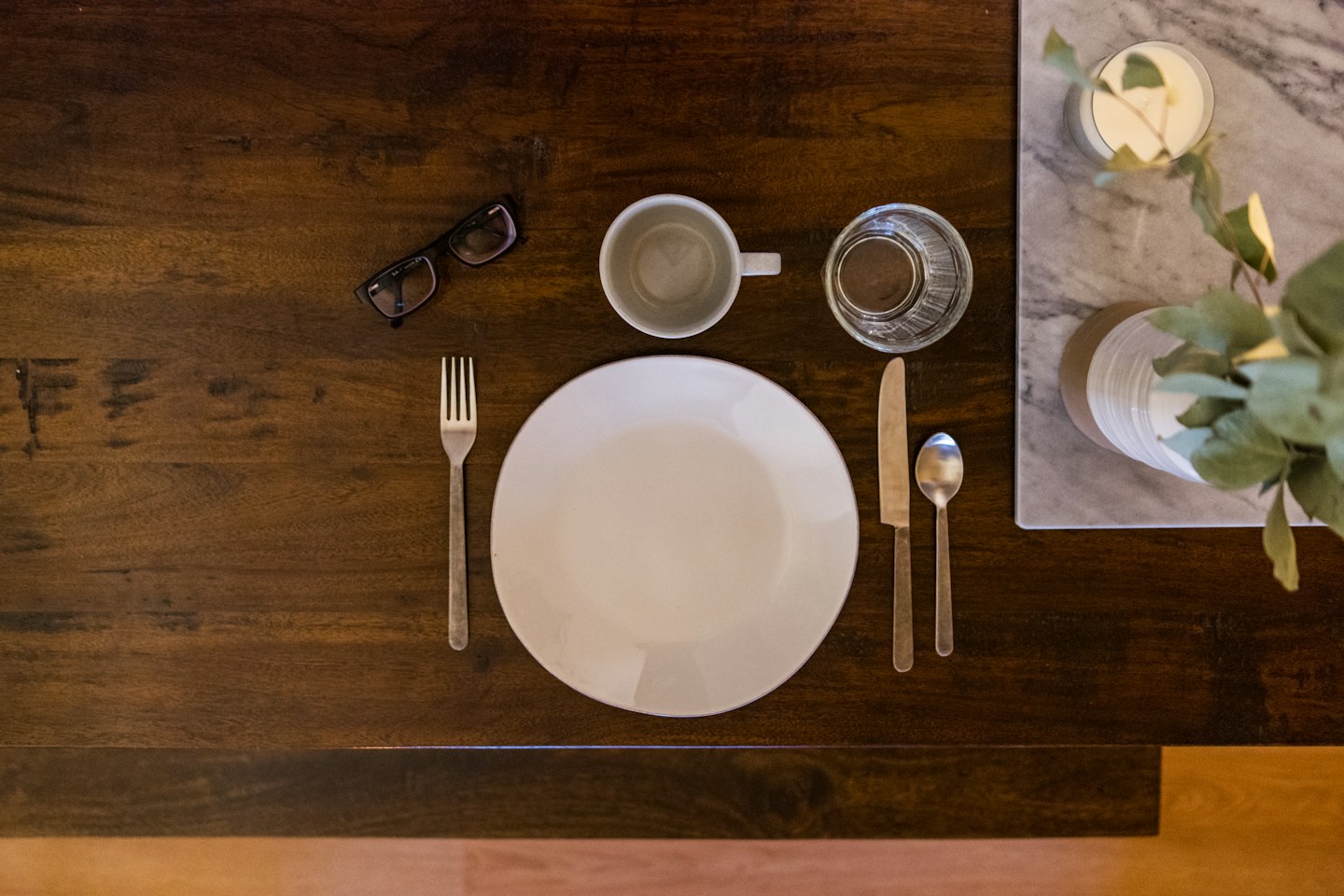
A flat dinner plate works differently from a deep bowl or a plate with a raised rim. Think through toast, soup, noodles, and meals with sauce. If most dinners are bowl meals, extra bowls may earn their space more readily than a stack of small side plates used only for decoration.
Choose versatility without forcing every meal into one awkward vessel. A moderately deep bowl can serve several everyday purposes, but a very narrow opening may be inconvenient for cutting food. Check how a fork and knife would move, how food can be scooped, and whether the portion sits comfortably rather than crowding the rim.
Measure every place the dishes must fit
Measure cupboard depth, shelf height, and the available opening before buying. A plate might fit flat on a shelf but be awkward to slide out beneath the shelf above it. Include the height of a complete stack, not just one piece, and leave clearance for your fingers.
The dishwasher rack and any appliance used with the dishes are separate fit checks. A broad plate can obstruct neighboring items, and a tall bowl can make rack loading inefficient. If you use a microwave, compare usable space and the manufacturer’s suitability guidance rather than assuming all everyday dinnerware belongs inside.
Evaluate weight, finish, and care requirements
Lift the size you expect to use most often, imagining it with food rather than empty. Heavy pieces can feel substantial at the table but become cumbersome when carrying several or reaching a high shelf. A lighter option may be the better purchase even when its appearance seems less formal.
Read care instructions for the actual material and finish. Decorative details can change permitted use, so appearance alone does not establish dishwasher or microwave suitability. Look at the underside and rim as well as the face: awkward bases, pronounced contours, and difficult stacking can affect daily handling more than a matching pattern.
Compare bundles with replaceable individual pieces
A boxed service simplifies initial shopping, but its included mugs, side plates, or specialty bowls may duplicate what you already own. Count the pieces you would genuinely use and store. A bundle is only convenient when its proportions match your household, not simply because everything arrives together.
Individual pieces let you put more of the collection into frequently used shapes. Ask whether replacements are offered, while recognizing that future availability is never guaranteed. A simple, compatible mix of dishes can make later additions less disruptive than a collection that depends on an exact decorative match.
Who should skip the larger matching service
Skip a large service when daily dishes already fit your meals and your only concern is occasional hosting. Extra pieces compete with groceries, cookware, and accessible storage. For an infrequent celebration, borrowing compatible dishes can be preferable to moving a heavy stack around every week.
You also do not need to replace a useful mixed collection merely to make the cupboard uniform. Add the shape you repeatedly run short of, or replace pieces that no longer suit the routine. The strongest buying decision may be two additional bowls rather than an entirely new dinnerware collection.
Before you buy
- Count dishes used between ordinary washing cycles.
- Prioritize shapes that suit your most common meals.
- Measure cupboard depth and full stack height.
- Check dishwasher fit and permitted appliance use.
- Exclude bundle pieces that duplicate existing dishes.
Ready to compare options?
Use the criteria above to check dimensions, materials, care instructions, and the seller’s current terms. Retailer search results may include sponsored listings; they are not our ranked picks.
Browse Amazon options ↗Untracked retailer search · Opens a new tabCommon questions
Should every plate and bowl match?
No. Compatible sizes and useful shapes matter more in daily use. A mixed collection can also make individual replacement less restrictive.
How much guest dinnerware should I store?
Base it on people you host regularly and the space available. An occasional larger gathering does not automatically justify a permanent full service.
Are stackable bowls always space saving?
Only when the complete stack fits your shelf and is easy to separate. Deep nesting that makes pieces awkward to retrieve can undermine the benefit.
How this guide was prepared
This is general buying and organization guidance, not a hands-on product review. Match the advice to your household and check the manufacturer’s care and safety instructions before purchasing or use.
Our editorial standards →