This guide includes ordinary, untracked retailer search links. We do not earn a commission from these links at present. Read our disclosure.
Define the window problem before choosing fabric
A renter in a street-facing bedroom might be dealing with a bright lamp outside rather than strong daytime sunshine. Another may want a darker room for daytime rest. Note where the unwanted light enters: through the fabric, around the edges, above the rod, or through an uncovered section of the window.
Check the lease and existing hardware before shopping. Ask permission where required, and remember that removable mounting is not automatically permitted or compatible with every surface.
Distinguish blackout from room darkening
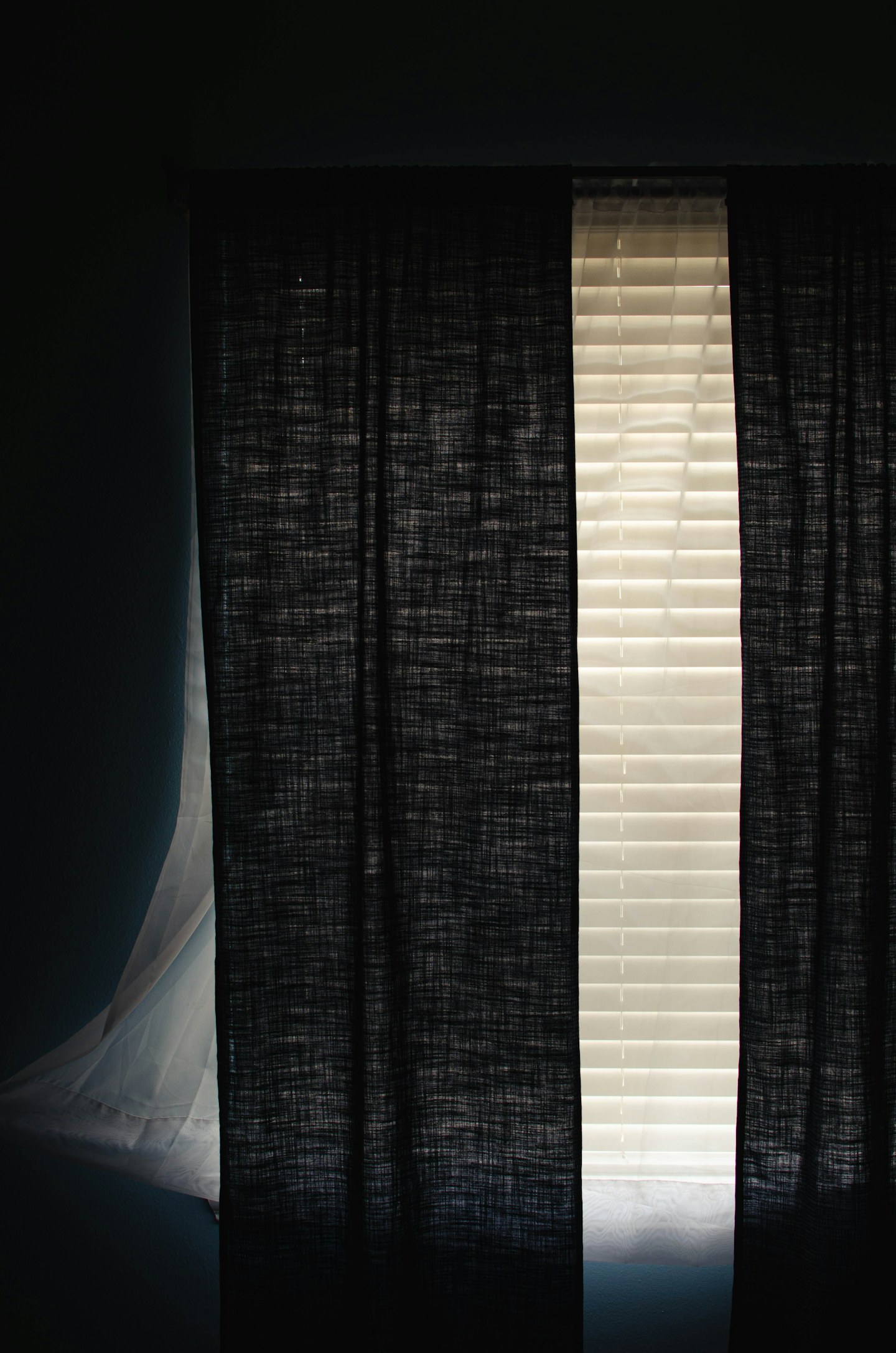
Room-darkening curtains reduce incoming light but may still allow some glow through the material. Blackout descriptions usually refer to a more light-blocking construction, such as a lining or coating. The result across the entire window still depends on coverage and installation, so the label alone cannot promise a completely dark bedroom.
Identify whether you are buying lined panels, a separate liner, or a coated fabric. Check attachments, care restrictions, and the window-facing appearance before committing.
Measure for coverage, not just the glass
Measure the available rod width and the distance to the intended curtain hem. Decide whether panels can extend beyond the window at each side without blocking furniture or a door. Added overlap can reduce edge gaps, but available wall space may limit the arrangement. Follow the supplier's width guidance for the intended fullness.
Confirm whether the package contains one panel or a pair. Heading styles affect attachment and top coverage, so compare panel dimensions with your complete planned arrangement.
Match mounting to weight and surface
Tension rods can be useful inside a suitable recess, but their stated span, load limit, and surface requirements need checking. Heavier lined panels may exceed what a lightweight rod is intended to support. Do not assume a rod is suitable merely because it reaches across the opening.
Adhesive brackets need compatible surfaces and correct installation. Read load and removal instructions; when compatibility is unclear, approved existing hardware offers a more straightforward starting point.
Keep everyday access in the plan
Curtains should still let you reach window handles and operate the window as intended. Check nearby heaters, vents, and other features against their own clearance requirements. Avoid arranging fabric where it obstructs necessary access. The best layout is one you can open and close without moving half the room.
Check where open panels will gather. Extra layers add bulk and weight, so skip them if the small room or existing hardware cannot accommodate them.
Choose the easiest workable compromise
If the main issue is light passing through existing curtains, a compatible liner may be enough. If the trouble is edge gaps, replacing the fabric without changing coverage may disappoint. Address the specific source of light first, then consider appearance and care. Darker-looking fabric is not automatically a more effective blocker.
Skip heavy panels on inadequate mounting and adhesive methods with unclear compatibility. Keep packaging until fit is confirmed, and respect the retailer's return conditions.
Compare the practical tradeoffs
| Approach | Useful situation | Limitation to check |
|---|---|---|
| Lined blackout panels | Replacing curtains on a suitable existing rod | Panel weight and surrounding light gaps |
| Separate blackout liner | Keeping a curtain style you already like | Attachment compatibility and extra bulk |
| Room-darkening panels | Reducing brightness with a lighter setup | May still allow visible light through |
Before you buy
- Check lease restrictions and any permission needed for new curtain hardware.
- Identify whether unwanted light enters through fabric or around the edges.
- Measure rod span, desired hem position, and available side overlap.
- Confirm panel quantity, heading style, and compatibility with existing hardware.
- Read mounting load limits, surface requirements, care guidance, and removal instructions.
Ready to compare options?
Use the criteria above to check dimensions, materials, care instructions, and the seller’s current terms. Retailer search results may include sponsored listings; they are not our ranked picks.
Browse Amazon options ↗Untracked retailer search · Opens a new tabCommon questions
Will blackout curtains make the whole room completely dark?
Not necessarily. A light-blocking panel can still leave gaps at the sides, top, or bottom. Hardware position and panel overlap matter as much as fabric. Start by locating the light paths, then choose coverage that addresses them within the room's practical constraints.
Are tension rods suitable for every rental window?
No. They need an appropriate span and supporting surfaces, and their load limits vary. Check the rod instructions and the combined curtain weight. If the recess or surface is unsuitable, use approved existing hardware or ask the property manager about another mounting option.
Can a renter add a liner to existing curtains?
Sometimes. Check whether the liner attaches to the existing heading or needs separate hardware, and verify dimensions. Include its weight when assessing the rod. Also compare the care labels, since a liner and outer curtain may need to be cleaned separately.
How this guide was prepared
This is general buying and organization guidance, not a hands-on product review. Match the advice to your household and check the manufacturer’s care and safety instructions before purchasing or use.
Our editorial standards →