This guide includes ordinary, untracked retailer search links. We do not earn a commission from these links at present. Read our disclosure.
Start with the moment you come home
Picture arriving with groceries, a work bag, and damp shoes while someone else needs to leave. The first useful surface is somewhere to put the bag without blocking the door. Identify what lands on the floor during that moment and give those objects the easiest positions to reach.
Keep daily belongings separate from occasional equipment. A regularly used helmet belongs near the exit; a suitcase does not. When several people share one narrow doorway, assign each person a modest zone rather than creating a communal pile.
Measure movement before choosing furniture
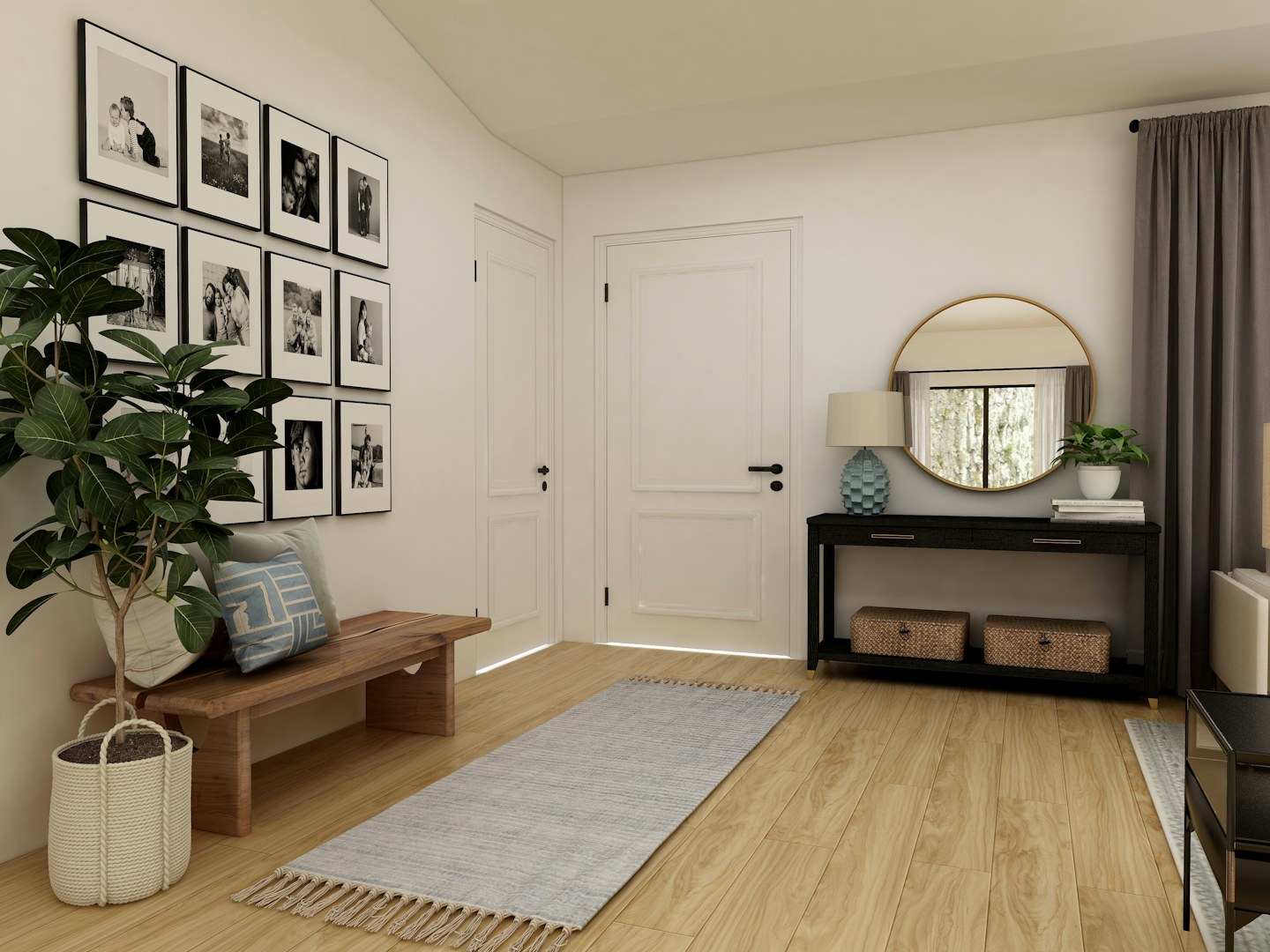
Measure the available wall, the opening door, and the route into the next room. Include projecting handles and hanging coats. A unit that fits against the wall can still make the entrance awkward when someone bends down to reach its lower shelf.
Outline the proposed footprint with removable floor markers, then walk through carrying a laundry basket. Shallow storage preserves circulation. If a busy passage leaves little room, skip the bench and use a small shelf plus suitable hooks instead.
Give small essentials a visible home
A shallow tray can hold keys, an access card, and sunglasses without becoming a drawer of unrelated objects. Choose a size that matches daily essentials. Separate compartments can help when household members carry similar keys or share the same landing surface.
Place the tray where you can reach it easily, but consider what is visible through an open doorway. An opaque compartment offers privacy at the cost of visibility. Avoid creating a hidden location that everyone forgets to use.
Choose hooks around loaded bags
Look beyond the number of hooks on a rail. Check mounting instructions, load guidance, spacing, and room for a filled bag. Closely spaced hooks may hold scarves neatly while bulky backpacks overlap and hide one another. Confirm compatibility with the intended wall surface.
Removable mounting is appropriate only where product instructions permit the surface and load. An over-door rack avoids wall fixings but may affect closure. A freestanding rack adds flexibility while occupying floor space, which can be a significant tradeoff here.
Contain shoes without keeping every pair
A washable shoe tray creates a boundary for footwear and catches everyday dirt. Check whether it accommodates the shoes actually worn, including boots. Open shelves make pairs easy to find; closed storage conceals them but requires adequate internal room and suitable ventilation.
Reserve the entrance for pairs currently in rotation. Store occasional shoes elsewhere instead of enlarging the unit. Follow footwear care guidance before storing wet shoes, and choose storage surfaces that are straightforward to wipe after a rainy commute.
Make the reset smaller than the routine
Add an outgoing spot for returns, library books, or paperwork that must leave the house. Keep it separate from incoming mail. A small basket works when its contents remain visible and it gets emptied rather than becoming permanent storage.
Try the layout with an existing dish and spare basket before purchasing replacements. If everyone uses those locations, buy pieces that improve fit or durability. Skip a coordinated set when only one component solves a real problem; unused compartments encourage accumulation.
Before you buy
- Measure door swing and the main route through the entrance.
- Choose a landing spot for the bag carried most often.
- Check hook spacing, surface suitability, and stated load guidance.
- Limit entryway shoes to pairs currently in regular rotation.
- Keep outgoing errands separate from incoming mail and receipts.
Ready to compare options?
Use the criteria above to check dimensions, materials, care instructions, and the seller’s current terms. Retailer search results may include sponsored listings; they are not our ranked picks.
Browse Amazon options ↗Untracked retailer search · Opens a new tabCommon questions
What if there is no wall beside the door?
Use a nearby existing surface with a small tray, then consider freestanding storage only if circulation remains clear. The drop zone can sit slightly beyond the entrance rather than immediately beside the door.
Does every small entryway need a bench?
No. A bench helps when sitting to put on shoes is part of the routine. Skip it if another nearby seat serves that purpose or its footprint makes movement awkward.
How do I keep the tray from overflowing?
Define what belongs there and move everything else during a regular reset. If mail repeatedly appears, create a separate temporary spot rather than enlarging the tray to accommodate unrelated paperwork.
How this guide was prepared
This is general buying and organization guidance, not a hands-on product review. Match the advice to your household and check the manufacturer’s care and safety instructions before purchasing or use.
Our editorial standards →