This guide includes ordinary, untracked retailer search links. We do not earn a commission from these links at present. Read our disclosure.
Start with the room after a working day
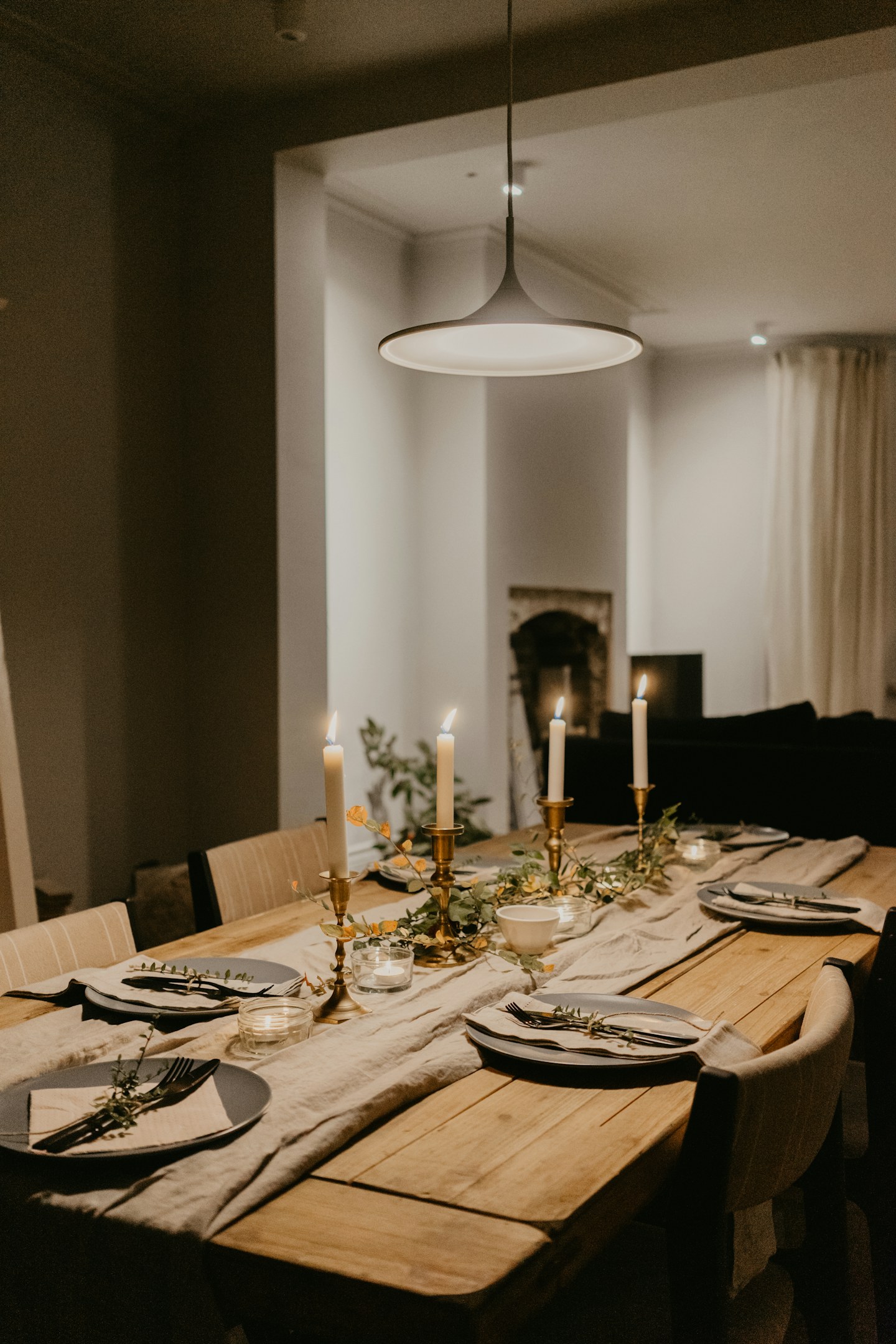
Four friends are coming for Friday dinner, but your dining table is also your weekday workspace. Before considering serving accessories, plan where the laptop, cables, and papers will go. A temporary box on a bedroom shelf may create more useful dining space than any new table organizer.
Check seats, elbow room, and a clear path to the kitchen. Hosting comfortably is not the same as reproducing a formal table setting. If the room cannot accommodate several large serving dishes, choose a meal you can portion in the kitchen rather than buying a larger display to squeeze between guests.
Choose a menu that limits equipment
Think about the number of cooking and serving tasks that must happen at once. A meal with one main dish and a simple side asks less of a small kitchen than several courses needing separate platters, pans, and utensils. Let your existing equipment shape the menu instead of shopping to support an elaborate plan.
Avoid creating a last-minute appliance traffic jam. If dinner uses the oven, decide whether dessert can be prepared earlier or served without another heated step. Simplifying the sequence reduces the temptation to buy a special warmer, stand, or countertop device that has nowhere to live afterward.
Give ordinary dishes a second role
Inventory the bowls, plates, trays, and utensils you already use. A suitable everyday bowl can hold a shared salad; a large plate can carry bread; a tray can gather drinks before guests arrive. Check capacity and handling rather than insisting that each food needs a named serving accessory.
Use cookware at the table only when its manufacturer permits the intended use and the surface is appropriately protected. A vessel suitable for cooking is not automatically convenient for passing between guests. When it is heavy or awkward, portion food in the kitchen and use the dishes you can handle comfortably.
Borrow rare extras and buy recurring roles
If you lack two chairs or a large serving dish for a rare gathering, ask to borrow before filling storage with substitutes. Arrange collection and return in advance so borrowing does not become another rushed chore. Keep borrowed items distinct during cleanup, especially when several similar pieces are on the table.
For frequent hosting, buy around a recurring role rather than one occasion’s theme. A serving bowl that also works for weekday meals has a clearer storage justification than a novelty stand. Assess where the item will live, whether it nests, and how often you will actually retrieve it.
Design the drinks and cleanup route
Put drinks where people can reach them without crossing the cooking area. A small tray of glasses and a manageable water vessel may be enough; an oversized dispenser can consume preparation space and add washing. Leave the main work surface available for finishing food instead of covering it with a decorative station.
Before dinner, clear the draining area and identify containers for leftovers. During cleanup, gather ordinary dishes separately from bulky cookware and borrowed pieces. Having an open route from table to sink is more valuable than another tabletop accessory. Restore the workspace after drying and storing everything, not by hiding damp items.
Who should skip occasion-only purchases
Skip themed collections, matching beverage dispensers, and several sizes of stands when you host only occasionally. They solve a presentation problem while creating a year-round storage problem. A relaxed meal can feel intentional through a clear table, useful lighting, and an orderly serving plan without extra decorative equipment.
Households that entertain often may justify dedicated pieces, but frequency alone does not make every accessory necessary. Notice a repeated frustration before buying: insufficient seating, an awkward serving utensil, or a bowl that is consistently too small. Fix that specific bottleneck and leave unrelated accessories off the list.
Before you buy
- Clear work materials before planning table accessories.
- Confirm seating and a clear route to the kitchen.
- Choose a menu that fits existing cooking equipment.
- Borrow extras needed only for unusual guest numbers.
- Reserve drying space and leftover containers before dinner.
Ready to compare options?
Use the criteria above to check dimensions, materials, care instructions, and the seller’s current terms. Retailer search results may include sponsored listings; they are not our ranked picks.
Browse Amazon options ↗Untracked retailer search · Opens a new tabCommon questions
Do I need matching serving dishes?
No. Suitable capacity, easy handling, and a consistent serving plan are enough. Everyday dishes can be useful without looking like a dedicated set.
When is a dedicated platter worth buying?
When a repeated serving task is difficult with your existing dishes and the platter has an accessible storage place. A single celebration is a weaker reason.
How can a working table feel ready for guests?
Remove the work equipment completely, keep the table surface clear, and arrange only what dinner needs. A deliberate setup does not require permanent hosting accessories.
How this guide was prepared
This is general buying and organization guidance, not a hands-on product review. Match the advice to your household and check the manufacturer’s care and safety instructions before purchasing or use.
Our editorial standards →