This guide includes ordinary, untracked retailer search links. We do not earn a commission from these links at present. Read our disclosure.
Follow one meal from kitchen to lunch break
Consider a portion of vegetable pasta saved after dinner. If it travels from the refrigerator to a table at home, container weight may barely matter. If it goes into a commuter bag alongside a laptop and water bottle, weight and shape become daily concerns. Start with that journey rather than a universal material winner.
Also separate storing, transporting, and reheating into distinct tasks. You might carry lunch in one container and serve it in another. Instructions vary across containers and lids, so verify the intended uses for the exact item.
Understand what each material asks of you
Glass often suits leftovers that stay in the kitchen because its rigid body feels substantial and lets you see the contents. It can be heavy in multiples and deserves care around edges and crowded sinks. Choose a size you can lift comfortably when full, especially if refrigerator shelves sit above shoulder height.
Plastic is often the more convenient choice for packed lunches and stacks of empty containers. Some foods may leave odors or discoloration, and surfaces can show wear over time. Follow the maker’s care and replacement guidance. People who dislike maintaining stained containers may prefer another material for frequently stored sauces.
Inspect the lid before committing to a set
A food container is a body and a lid working together. Look at whether closures can be operated easily, whether the rim is straightforward to clean, and whether replacement lids are available. A complicated seal may be frustrating if you pack lunch half awake or have difficulty gripping small clips.
For soup carried in a bag, review the product’s stated transport suitability rather than assuming that a snug lid is enough. Consider carrying the container upright in a separate lunch compartment. Removable gaskets can make thorough cleaning easier, but tiny channels and loose parts add work. Simple lids may be better for home leftovers.
Buy useful sizes instead of a large assortment
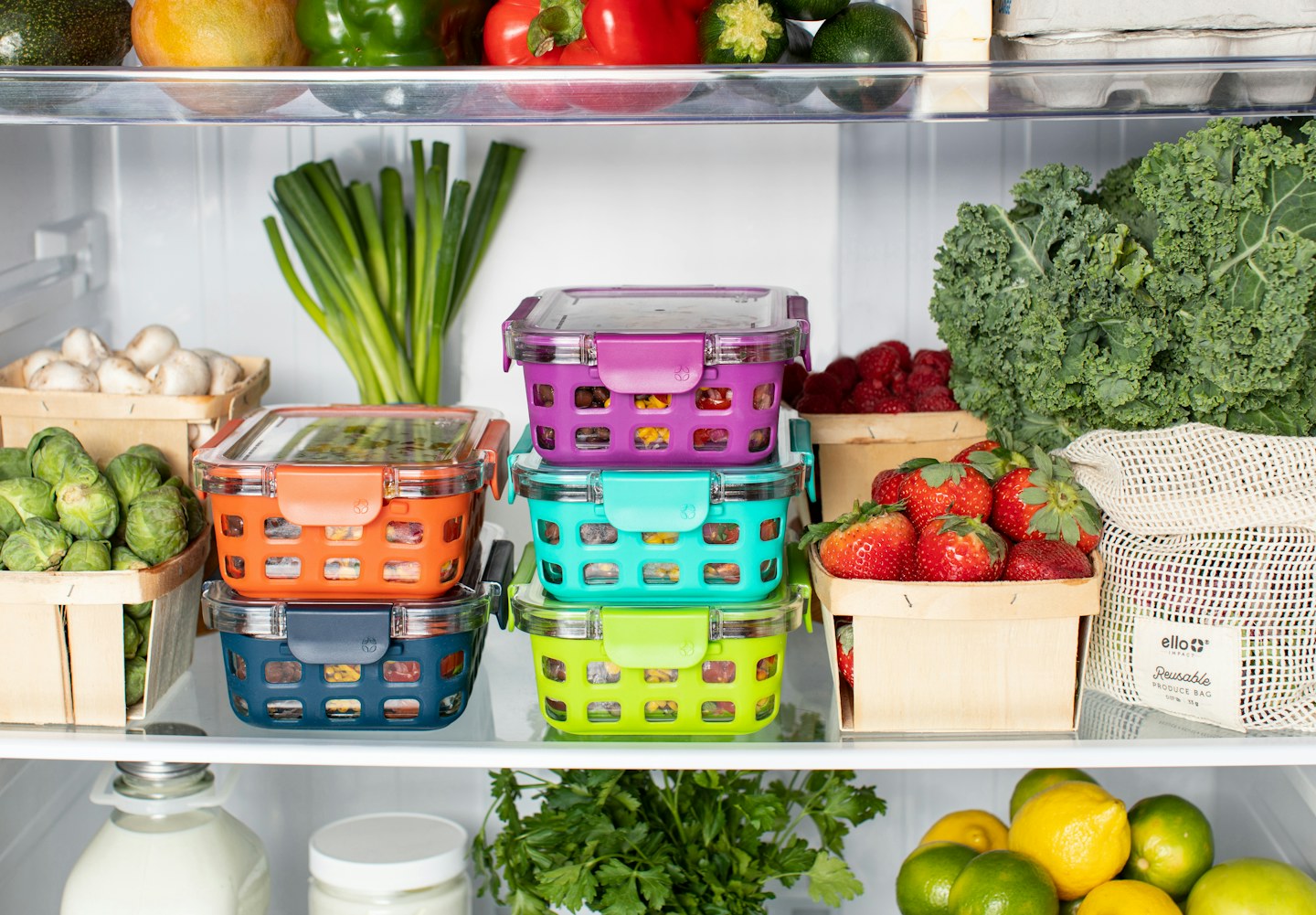
Measure a refrigerator shelf and the inside of your lunch bag. A container that holds a generous meal is not useful if it cannot sit upright inside the bag. Rectangular shapes often use shelf space efficiently, while round shapes can be convenient for stirring. Check the external dimensions, not only the advertised capacity.
Choose a few repeated sizes that cover single portions, shared leftovers, and small extras. Repeated lid shapes reduce the search for a match. Skip a large coordinated set if most pieces would be too small or too large for your meals. A modest mixed collection can work better than a complete but unsuitable system.
Allow a mixed collection when routines differ
A household might use glass for dinner leftovers and lightweight plastic for sandwiches, fruit, or workplace lunches. That is a practical division, not an organizational failure. Keep transport containers near lunch supplies and home storage near the refrigerator. Separate lids by shape so the system remains easy to use.
Skip glass for situations where its weight or breakability would create recurring inconvenience, such as frequent transfers between bags. Skip plastic if its appearance after everyday use would bother you enough to replace it repeatedly. Whatever you choose, read the care instructions for both body and lid, and avoid treating convenience as a safety guarantee.
Compare the practical tradeoffs
| Consideration | Glass | Plastic |
|---|---|---|
| Carrying lunch | More weight to carry | Usually lighter |
| Empty storage | Often bulky or rigid | Often easier to nest |
| Sauces and appearance | Often easier to keep visually clear | May retain stains or odors |
| Care decisions | Check body and lid instructions | Check body and lid instructions |
Before you buy
- Map the container’s storage and transport routine.
- Check appliance guidance for both body and lid.
- Measure lunch bags and refrigerator shelf clearance.
- Inspect closures, gasket access, and replacement lid options.
- Choose repeated sizes that match your usual portions.
Ready to compare options?
Use the criteria above to check dimensions, materials, care instructions, and the seller’s current terms. Retailer search results may include sponsored listings; they are not our ranked picks.
Browse Amazon options ↗Untracked retailer search · Opens a new tabCommon questions
Is one material always better for leftovers?
No. Weight, cupboard space, cleanup preferences, and the food you usually store all matter. Glass may suit home use while plastic may suit transport. The exact construction and care guidance still need attention.
Can I reheat food with the lid attached?
Follow the instructions for that container and lid. Do not infer lid suitability from the body material. If the directions are unclear, use a different vessel with explicit guidance for the reheating method you intend to use.
Should I replace all my existing containers together?
Usually not. Keep useful pieces in service according to their condition and care guidance. Replace frustrating sizes or missing lids first, then add compatible pieces gradually. This helps you discover what your household actually uses.
How this guide was prepared
This is general buying and organization guidance, not a hands-on product review. Match the advice to your household and check the manufacturer’s care and safety instructions before purchasing or use.
Our editorial standards →